
California · SELF-PACED COURSE
California: Epinephrine Auto-Injector
- EMT
- AEMT
- Paramedic
Review California EMT education concepts for epinephrine auto-injectors; practical verification and local authorization are separate.
60 minutesMinimum study time
20 lessons6 modules · Self-paced
12 monthsOf course access
Learning recordAfter required completion
COURSE OVERVIEW
Learning That Fits Your Schedule
Work through the lessons, required activities and knowledge checks. Your saved place lets you return between sessions. Complete the final assessment and evaluation to receive a learning completion record.
Online coursework does not replace supervised hands-on competency. Follow your scope of practice, local protocols and medical direction.
LEARNING OBJECTIVES
What You’ll Learn
- Distinguish California knowledge education, approved observed skills verification and actual local medication authority, including source reconciliation.
- Recognize consequential allergic-reaction findings and maintain assessment and support while interpreting epinephrine benefit, risks and arrest boundaries.
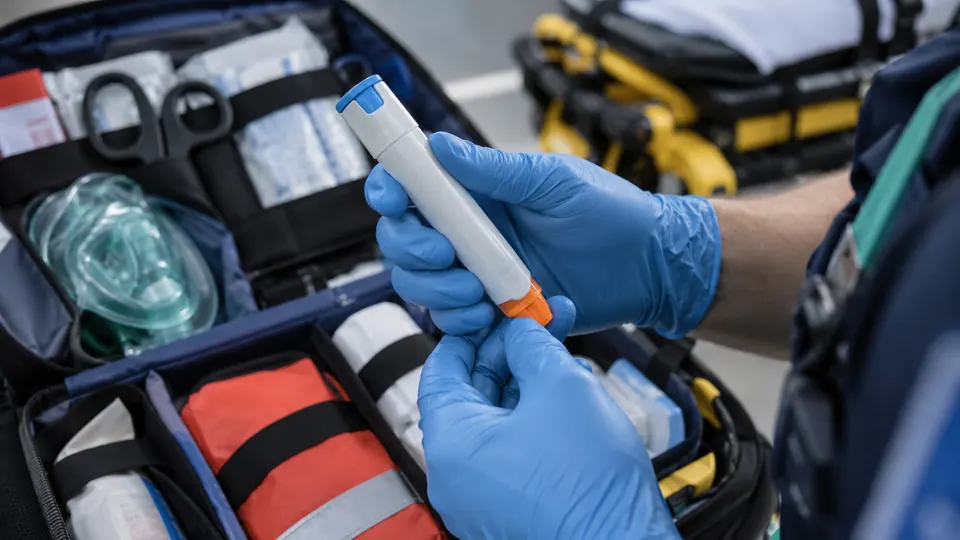
- Verify the correct authorized fixed-dose device and explain the named EpiPen preparation, activation and completion sequence without unsafe dose modification.
- Coordinate pediatric positioning, respond to device incidents, maintain readiness and reassessment, and communicate treatment history through handoff and practical evaluation.
- Develop written plans for evolving auto-injector cases and document treatment and remaining clinical, local, practical and CE review requirements accurately.
YOUR LEARNING PATH
Inside the Course
01California Education and Local Authority
02Recognition, Assessment and Epinephrine Reasoning
03Product Selection and Named-Device Sequence
04Pediatric Control, Incidents and Readiness
05Reassessment, Handoff and Practical Evaluation
06Progressive Cases, Documentation and Release Review
CE approval & acceptance
This course currently awards 0 approved CE hours. Check acceptance details.
Course material is being revised. Clinical review is not yet complete.