
Patient Assessment · SELF-PACED COURSE
Assessment of Special Populations
- EMR
- EMT
- AEMT
- Paramedic
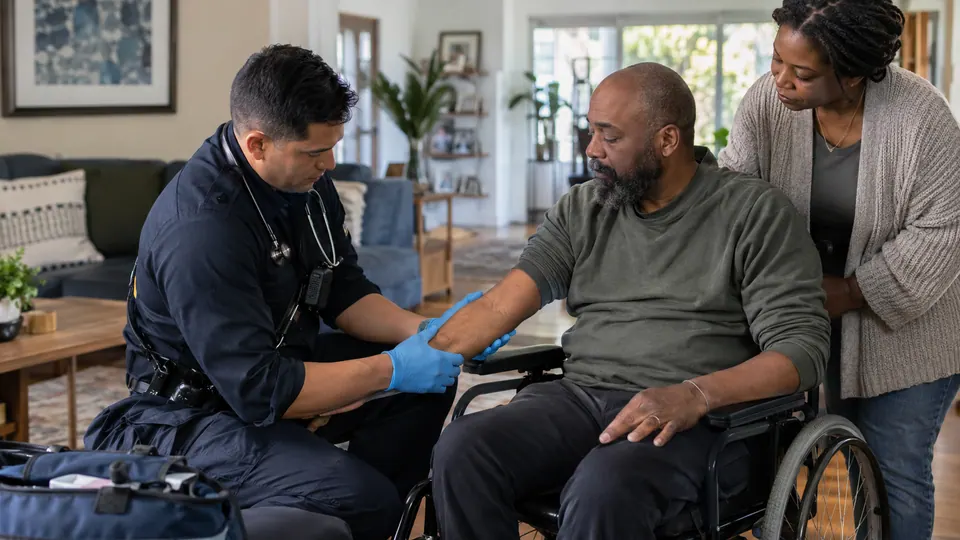
Adapt examination and history methods for disability, communication barriers, and altered baseline function.
60 minutesMinimum study time
20 lessons6 modules · Self-paced
12 monthsOf course access
Learning recordAfter required completion
COURSE OVERVIEW
Learning That Fits Your Schedule
Work through the lessons, required activities and knowledge checks. Your saved place lets you return between sessions. Complete the final assessment and evaluation to receive a learning completion record.
Online coursework does not replace supervised hands-on competency. Follow your scope of practice, local protocols and medical direction.
LEARNING OBJECTIVES
What You’ll Learn
- Establish individual function, patient participation and the equipment or environmental access needed for a meaningful assessment.
- Select and verify adaptations for sensory, motor, speech and sensory-processing differences without unsupported conclusions about understanding.
- Compare age, development and chronic functional differences with current findings while preserving safe examination and standardized-test limits.
- Interpret support and relevant health history, attribute collateral evidence and communicate findings, adaptations and examination limits.
- Develop and review written evolving-case plans that reveal new concerns through accessible assessment while distinguishing educational completion from practical and professional approval.
YOUR LEARNING PATH
Inside the Course
01Individual Function, Participation and Examination Access
02Sensory, Motor and Communication Adaptations
03Development, Aging and Chronic Functional Differences
04Support Context and Relevant Health History
05Collateral Evidence, Examination Limits and Handoff
06Progressive Cases and Adapted-Assessment Review
CE approval & acceptance
This course currently awards 0 approved CE hours. Check acceptance details.
Course material is being revised. Clinical review is not yet complete.